

01 / NUTRITION
The numbers, clearly.
The table describes the cited sample. It does not promise an exact match for every brand or recipe.
| Nutrient | 100 g | Example portion · 30 g |
|---|---|---|
| Calories | 626 kcal | 188 kcal |
| Protein | 21.4 g | 6.4 g |
| Carbohydrate | 20 g | 6 g |
| Fat | 51.1 g | 15.3 g |
The portion is a calculation example, not a recommended amount.
02 / CALCULATE
How much is on your plate?
Choose a weight: values update instantly, without saving what you enter.
Proportional estimate from the cited sample. Preparation, brand and added ingredients can change the result.
03 / IN REAL LIFE
From number to plate.
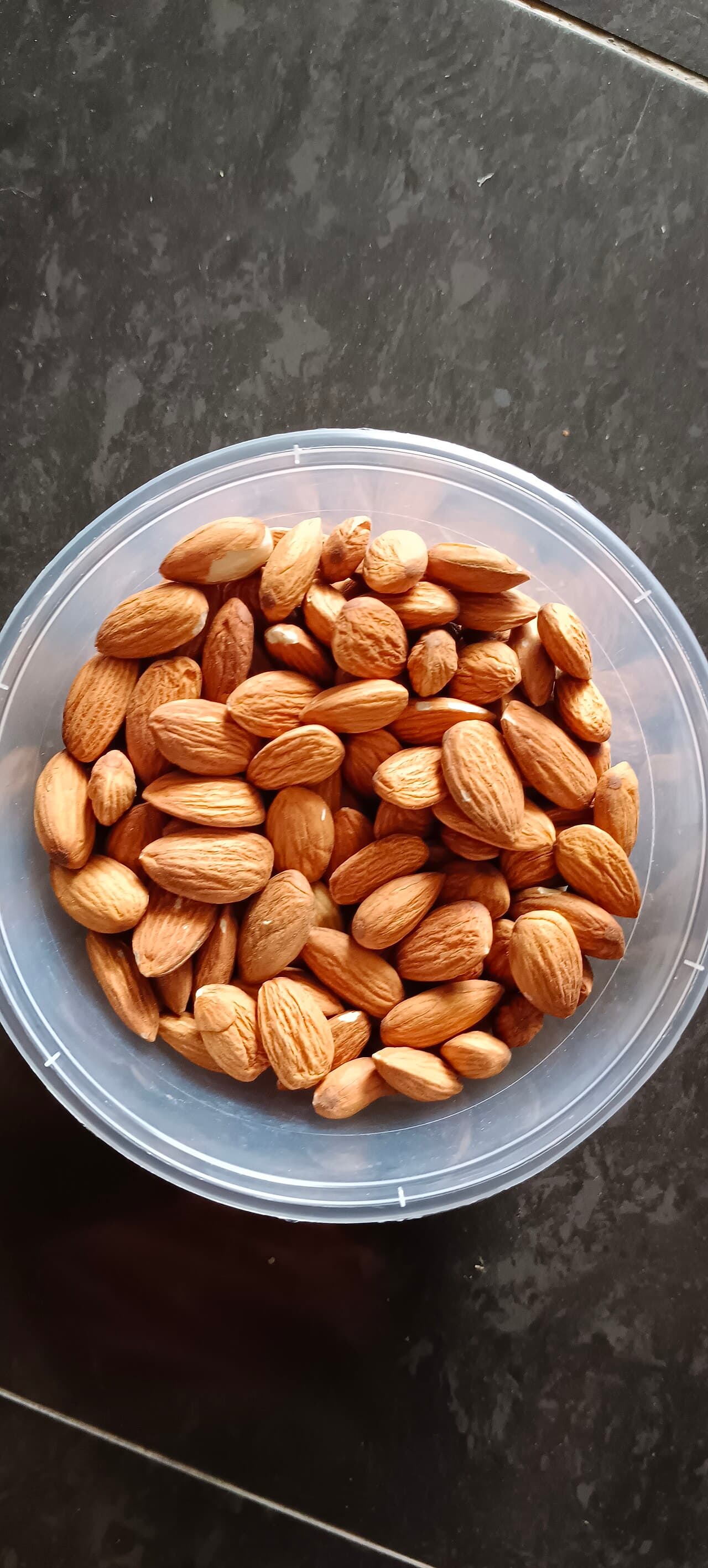
This sample is unroasted; oil, salt or coatings change the product.
The sample is unroasted almonds. Weigh a snack handful: almond size and how many you take change the total. Salted or coated almonds are different products.
A table helps you orient yourself; the plate you cook or order has its own ingredients and quantities. For a useful estimate, record what you know, correct what seems off and consider the meal in the context of your habits, without turning a number into a verdict.
04 / SOURCE AND LIMITS
Which food did we measure?
We selected an identifiable sample from the source below. Energy and macronutrients are per 100 g of edible food; the interactive portion is a simple proportion. It is not a measurement of your plate.
05 / FAQ
The useful questions
How many calories and how much protein are in 100 g?
The selected Almonds sample has 626 kcal and 21.4 g of protein per 100 g.
Why might my plate be different?
This sample is unroasted; oil, salt or coatings change the product.
How do I use this estimate without chasing perfection?
Use the table as a reference, then consider the weight, added ingredients and your preparation. In Vesta you can review an estimate before confirming it in your diary and see the meal in the context of your week.
General information, not personalized dietary or medical advice. Values vary by sample and preparation.